
Embodied Intuition
Embodied Intuition Awakened
A sacred path of intuitive awakening—where channelled insight meets practical development for your highest potential. This is a skill that AI cannot replace.
Embodied Intuition
The White Lotus Journey: Embodied Intuition Awakened
A sacred path of intuitive awakening—where channelled insight meets practical development for your highest potential. This is a skill that AI cannot replace.
What is Embodied Intuition?
Embodied Intuition is the art of bringing your inner knowing fully online—anchoring it not only in thought, but in body, spirit, and daily living. In a world that moves at lightning speed, intuition becomes a compass for remembrance, wholeness, and sovereignty. It is not a skill that technology or AI can replicate; it is a living, breathing connection to your deepest truth.
Empowered inSight Offers
Explore intuitive guidance and personal development experiences designed to support clarity, energetic alignment, self-trust, and deeper connection with your inner wisdom.
30 Minute
Reading
A focused session for up to two questions. Ideal for quick clarity, practical insight, or a deeper look into one specific situation needing guidance.
60 Minute
Reading
An expanded session for up to four questions. Suitable for exploring several life areas or one deeper question with more detail and intuitive perspective.
Animal
Companion Readings
Honour the wisdom of your animal companions through messages of love, healing, and understanding that strengthen the energetic bond between you.
The White
Lotus Journey
A one on one intuitive development pathway that helps you awaken your intuitive voice, trust your inner compass, and live with greater clarity.
What is Embodied Intuition?

Embodied Intuition is the art of bringing your inner knowing fully online—anchoring it not only in thought, but in body, spirit, and daily living. In a world that moves at lightning speed, intuition becomes a compass for remembrance, wholeness, and sovereignty. It is not a skill that technology or AI can replicate; it is a living, breathing connection to your deepest truth.
Empowered
inSight Offers
Explore intuitive guidance and personal development experiences designed to support clarity, energetic alignment, self-trust, and deeper connection with your inner wisdom.
Channeled
Intuitive Readings
Receive sacred intuitive guidance that brings through insight, energetic clarity, and multidimensional perspective for career, relationships, life questions, and personal direction.
30 Minute
Reading
A focused session for up to two questions. Ideal for quick clarity, practical insight, or a deeper look into one specific situation needing guidance.
60 Minute
Reading
An expanded session for up to four questions. Suitable for exploring several life areas or one deeper question with more detail and intuitive perspective.
Animal
Companion Readings
Honour the wisdom of your animal companions through messages of love, healing, and understanding that strengthen the energetic bond between you.
The White
Lotus Journey
A one on one intuitive development pathway that helps you awaken your intuitive voice, trust your inner compass, and live with greater clarity.
Embodied
Intuitive Growth
Develop grounded practices that help you integrate intuition into daily choices, relationships, creativity, resilience, and whole living.
Add a Title Here
Add Subtext text. Click "Edit Text" to update the font, size and more.
To change and reuse text themes, go to Site Styles.
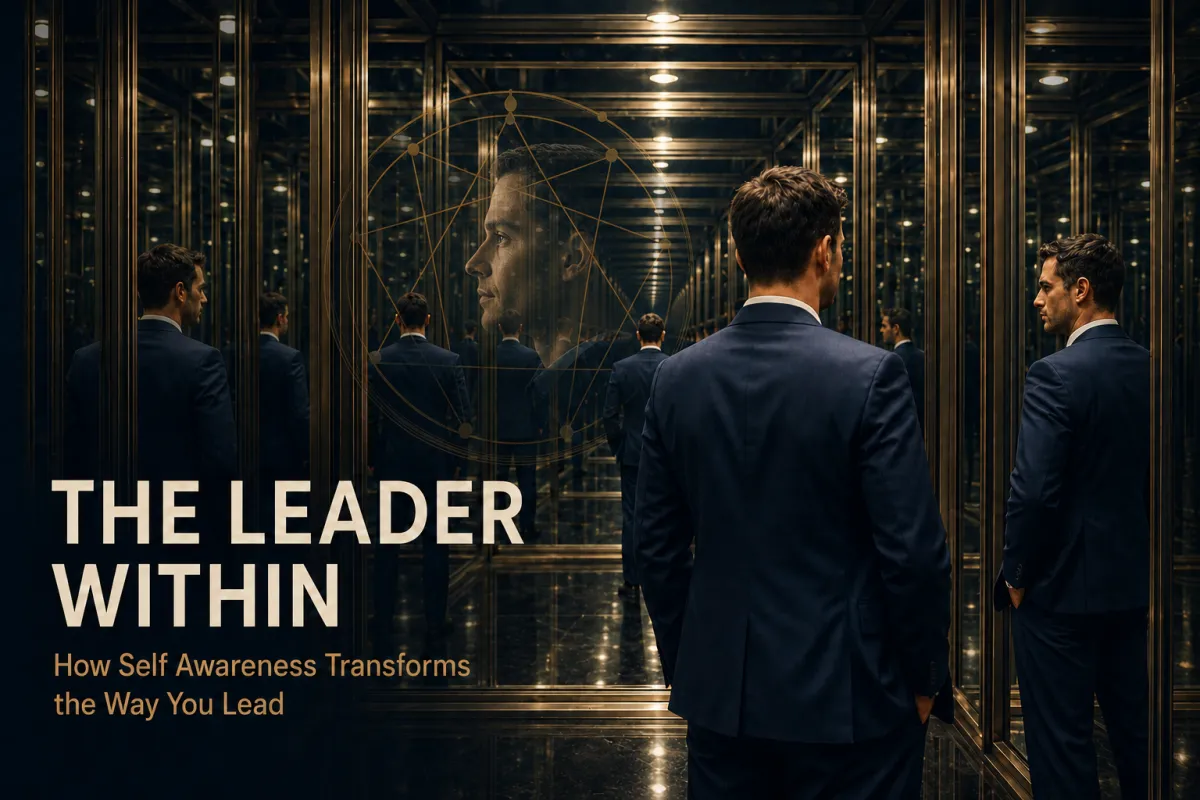
Leadership Self Awareness: Transform How You Lead
The Leader Within: How Self Awareness Transforms the Way You Lead
Leadership is often measured by what others can see. Decisions made. Targets reached. Teams managed. Strategies implemented. Yet beneath every visible leadership action sits something less obvious: a motivation, fear, belief, habitual response, or story about responsibility, control, recognition, strength, success, or failure.
These inner drivers influence how leaders communicate, make decisions, respond to pressure, manage conflict, and affect those around them. When they remain unconscious, leaders can operate on autopilot without realising it.
This is why leadership self awareness matters. Before leaders can guide others with greater clarity, they must become willing to understand what is guiding them.
Leadership Begins Beneath Behaviour
Most leaders recognise the importance of communication, delegation, strategy, performance management, and decision making. These capabilities matter, but knowledge alone does not always create meaningful change. A leader may understand delegation and still struggle to release control. They may know how to listen and still become defensive when challenged.
The gap is not always a lack of knowledge. Sometimes it is a lack of awareness. Behaviour shows us what a leader does. Self awareness helps reveal why they do it.
The Enneagram as a Mirror for Leaders
The Enneagram reaches beyond personality labels. It offers a way to explore the motivations, fears, emotional habits, and protective strategies that influence how people move through the world. For leaders, it becomes a mirror. It does not place them into boxes. It helps them recognise the boxes they may already be operating from.
Every Enneagram type brings valuable qualities into leadership, with patterns that can become limiting without awareness. High standards can become rigidity. Empathy can lead to avoided boundaries. Ambition can make vulnerability feel unsafe.
The purpose is not to judge these patterns. It is to see them. Through the Leadership Awareness pathway, leaders can explore their motivations, reactions, strengths, and blind spots so they can lead with greater presence and intention.
Moving From Autopilot to Conscious Choice
Autopilot does not always look careless. It may be the leader who takes responsibility for everything because trusting others feels risky, protects harmony while unresolved tension harms the team, or demands perfection because mistakes feel personally threatening.
These responses can become so familiar that they feel like identity rather than habit. Self awareness creates a pause between the trigger and the response. Within that pause, a leader can ask:
What is happening within me right now?
What am I trying to protect or control?
Am I responding to this situation, or repeating a familiar pattern?
What does this moment genuinely require from me?
Awareness does not make every pattern disappear. It creates the possibility of choosing whether that pattern should direct the response.
Every Strength Has a Shadow
Leadership strengths can become limitations when overused or applied automatically. Confidence can become dominance. Care can become overinvolvement. Precision can become perfectionism. Decisiveness can become impatience. Optimism can become avoidance. Calmness can become disengagement.
The shadow does not mean the strength is false. It reveals what can happen when a valuable quality moves out of balance.
Leaders are often praised for behaviours that later restrict them. The leader who always steps in is seen as reliable. The leader who never shows uncertainty is considered confident. Over time, the team may become dependent and the leader exhausted while continuing to appear capable.
Leadership self awareness allows the leader to value the strength while recognising its cost.
Pressure Reveals Leadership Patterns
Pressure does not create every leadership pattern. It often reveals what was already present. Under strain, an open and collaborative leader may become controlling, withdrawn, reactive, critical, or scattered.
Self aware leaders notice changes in tone, the urge to take over or withdraw, defensiveness, impatience, and avoidance. Recognising these responses early helps leaders regulate themselves before their internal pressure becomes the team's emotional climate.
Presence does not mean remaining calm at all times or pretending to have every answer. It means staying connected to yourself, the people around you, and the reality of the moment.
A Leader's Inner State Enters the Culture
A leader's internal patterns do not remain private. When leaders react harshly to mistakes, people learn to hide problems. When leaders become defensive, people withhold feedback. When leaders repeatedly rescue the team, people escalate instead of taking ownership. When leaders avoid conflict, unresolved tension becomes part of how the team operates.
The opposite is also true. When leaders acknowledge their patterns and respond to feedback with curiosity, honest communication becomes possible. Leadership is also what people learn from being in a leader's presence. This connection between leadership, people, and organisational performance sits at the heart of Business inSight.
Self Awareness Strengthens Decisions and Feedback
Every decision is influenced by perception. One leader may focus on risk, another on opportunity. Self awareness helps leaders recognise their natural decision patterns and blind spots. A leader who values speed can learn when consultation is needed. One who values harmony can recognise when discomfort must be addressed.
It also changes how leaders receive feedback. When feedback is met with defensiveness, withdrawal, or subtle punishment, people begin sharing what feels safe rather than what is true. A self aware leader notices the internal reaction and becomes curious about the impact they may be having.
Self Awareness Is Not Self Judgement
Seeing yourself clearly is not the same as judging yourself harshly. Patterns often begin as protection. Control may have developed because uncertainty felt unsafe. Achievement may have become connected to worth. Avoiding conflict may have preserved important relationships.
The work is not to reject these strategies. It is to recognise when they are no longer serving the leader, team, or situation. Compassion allows leaders to understand a pattern without becoming trapped in shame. Awareness then makes another response possible.
My Approach at Empowered inSight
My background in industrial engineering taught me to value systems, structure, precision, and practical outcomes. My work with the Enneagram, intuition, emotional awareness, and human behaviour showed me that sustainable transformation requires understanding the people within a process.
At Empowered inSight, my role is not to tell leaders who they should become. It is to help them recognise who they are, what drives them, and how their patterns influence the people and systems around them.
I hold the mirror. The leader chooses what to do with what they see.
Leaders and organisations can explore the available development pathways through Business inSight or connect with Empowered inSight to discuss where support may be most valuable.
A Closing Reflection
Leadership begins before a strategy is communicated or a decision announced. It begins when leaders notice a reaction before acting, become curious about a pattern instead of defending it, and recognise that a strength may also contain a shadow.
The strongest leaders are not those who never struggle, react, or make mistakes. They are those willing to see themselves honestly and continue growing.
Self awareness does not make leadership effortless. It makes leadership more conscious. When leaders become more conscious, they create stronger conditions for trust, accountability, healthier decisions, and sustainable performance.

Discover Your Authentic Self with Empowered InSight

Return to
Your Self
Reconnect with the self beneath conditioning, trauma, and the need for external validation. This work invites you back to your authentic nature, where clarity, truth, and deeper alignment can begin to emerge.

Guided Transformation
Transformation is rarely easy, and no one is meant to walk it alone. Sarika offers a grounded, non judgmental space where each session is tailored to your unique path, needs, and unfolding process.

The White Lotus Journey
The white lotus reflects the journey of growing through lived experience, unconscious patterns, and emotional pain. With care and intention, this path can lead to joy, alignment, abundance, integrity, and true potential.
Scientific Angles on Intuition
Intuition is not simply mystical guesswork. It can also be understood as a rapid, non-conscious process shaped by pattern recognition, embodied signals, memory, and lived experience.
Understanding Intuition Through Science
Scientifically, intuition is increasingly understood as a fast, non-conscious cognitive process that draws on accumulated experience, subconscious memory, bodily cues, and neurodynamic processing. Rather than replacing logic, intuition often works alongside it, helping the mind and body recognise patterns before those patterns can be fully explained through conscious reasoning.
Neurobiological Foundations
Intuition arises through rapid brain-based processing, where neural networks integrate sensory input, memory, emotional signals, and prior experience. This can create what many people experience as a hunch, inner knowing, or immediate sense of direction before a full rational explanation is available.
Pattern Recognition
Intuition is strongly connected to the brain’s ability to recognise patterns without deliberate analysis. Experienced professionals, such as doctors, pilots, leaders, and specialists, often rely on intuitive judgement because their minds have absorbed thousands of subtle cues through repeated exposure and practice.
Gut Feelings and Embodiment
The phrase “gut feeling” reflects the connection between the body and decision-making. Signals from the nervous system, including the gut-brain connection and vagus nerve pathways, can influence how people sense risk, safety, alignment, or uncertainty. This helps explain why intuition is often felt physically, not only mentally.
Speed and Logic
Intuition often operates faster than step-by-step reasoning. It can be especially valuable in uncertain, complex, or time-sensitive situations where conscious analysis alone may be too slow. When developed responsibly, intuition can support clearer choices, stronger self-trust, and more integrated decision-making.
Frequently Asked Questions
Is there science behind intuition or clairvoyance?
Yes. While intuition is often described as “gut feeling” or “inner knowing,” neuroscience shows that the brain processes vast amounts of information unconsciously. This means intuitive insights are often the result of subtle pattern recognition, memory, and emotional intelligence working together. Many studies on the gut-brain axis, neuroplasticity, and subconscious processing support the idea that intuition is a natural human capability, even if the language of “downloads” or “clairvoyance” is more spiritual.
Does intuitive development go against my religious beliefs?
Not at all. Intuition is a universal human capacity—it doesn’t belong to any one religion or belief system. Developing intuition is about deepening your connection to yourself and your source of wisdom. Many people find it complements their faith, helping them listen more clearly to divine guidance, prayer, or inner truth.
Is intuition only for gifted people?
No. Intuition is innate in everyone. Some people may appear more “psychic” because they’ve practiced tuning into subtle signals, but just like a muscle, intuition strengthens with attention and training. The White Lotus Journey is designed to help anyone cultivate their intuitive gifts, whether you’re starting fresh or refining existing abilities.
Can everyone become “psychic”?
Yes although “psychic” is simply another word for heightened intuitive awareness. Everyone has the capacity to sense, feel, and know beyond logic. With practice, guidance, and embodied techniques, you can learn to trust your inner downloads and integrate them into daily life. It’s less about becoming someone else and more about remembering the wisdom you already carry.
“The intuitive mind is a sacred gift and the rational mind is a faithful servant. We have created a society that honors the servant and has forgotten the gift.”
–
Albert Einstein
“The intuitive mind is a sacred gift and the rational mind is a faithful servant. We have created a society that honors the servant and has forgotten the gift.”
–
Albert Einstein
Empowered inSight
Where Science meets Soul to awaken
lasting transformation.
Connect with us
Discover Your Authentic Self with
Empowered InSight.


© Copyright 2026. EMPOWERED INSIGHT .
All rights reserved.
Privacy Policy