
Discover and Align
The Journey Within: Self-Discovery Through the Enneagram
Self-awareness is not a destination—it’s the beginning of a lifelong journey. When you commit to seeing yourself clearly, you unlock the possibility of transformation, resilience, and authentic living.
Discover and Align
The Journey Within: Self-Discovery Through the Enneagram
Self-awareness is not a destination—it’s the beginning of a lifelong journey. When you commit to seeing yourself clearly, you unlock the possibility of transformation, resilience, and authentic living.
Discover & Align
A guided coaching journey that helps you understand who you are, recognise what drives you, and align your life with deeper truth, purpose, and inner peace.
Uncover
Who You Are
Explore the deeper layers of your identity, values, motivations, and inner patterns so you can understand yourself with more honesty, clarity, and compassion.
Understand
What Drives You
Use the wisdom of the Enneagram to recognise the beliefs, emotions, and behaviours that shape your choices, reactions, relationships, and growth.
Reconnect
With Your Self
Create space to return to your inner voice, strengthen self-trust, and move beyond the noise, pressure, and expectations that pull you away from alignment.
Release Limiting Narratives
Identify old stories, protective patterns, and inner blocks that no longer serve you, allowing more freedom, authenticity, and emotional ease to emerge.
Align
Inside and Out
Bring your inner awareness into daily life, relationships, decisions, and direction, creating a more grounded path that feels true from the inside out.
Cultivate
Purpose and Peace
Move toward a life shaped by greater authenticity, purpose, and calm, where your choices reflect who you are and what matters most deeply.
Add a Title Here
Add Subtext text. Click "Edit Text" to update the font, size and more.
To change and reuse text themes, go to Site Styles.
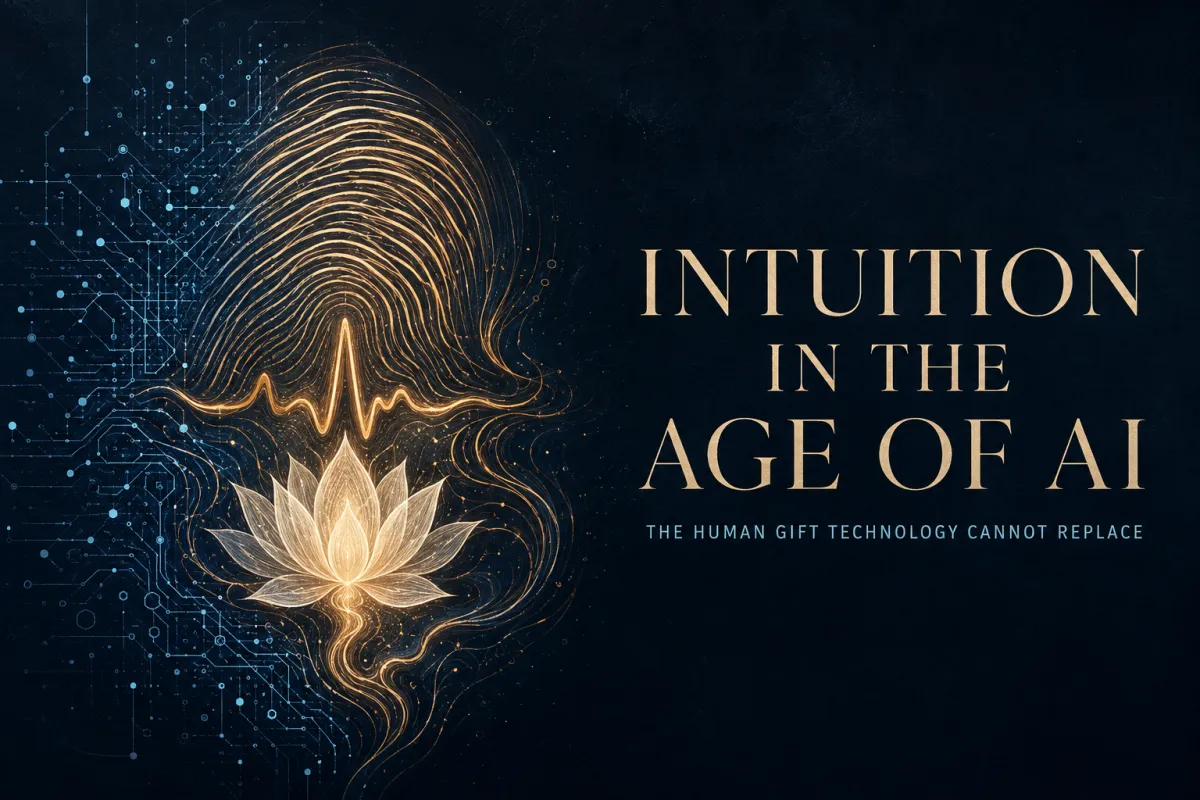
Intuition in the Age of AI | Empowered inSight
Intuition in the Age of AI: The Human Gift Technology Cannot Replace
Artificial intelligence has changed the way we work, communicate, create and make decisions. It can analyse large amounts of information within seconds, automate repetitive tasks, identify patterns, generate ideas and help us access knowledge faster than ever before. These capabilities are powerful, and they will continue to evolve.
Yet there is an important difference between processing information and experiencing life. Artificial intelligence can recognise patterns in data, but it does not inhabit a human body. It does not carry memories in the nervous system, feel the emotional atmosphere in a room or experience the quiet inner knowing that something is aligned, even before there is enough evidence to explain why.
This is where intuition remains uniquely human. As technology becomes more present in our lives, developing our intuitive awareness is not about rejecting progress. It is about remaining connected to the parts of ourselves that should never be outsourced.
What Is Intuition?
Intuition is often described as knowing something without consciously reasoning through every step that led to the conclusion. It may arrive as a quiet feeling, an image, a physical sensation or a sudden moment of clarity.
You may experience intuition as a sense of expansion or contraction in the body, a feeling that something requires closer attention or a quiet certainty that one path feels more aligned than another. It may appear through a dream or image that remains with you, an unexpected idea that seems to arrive fully formed or an awareness of what is not being said in a conversation.
Intuition is not always dramatic. Often, it is subtle. The difficulty is that many of us have become accustomed to noise. We are surrounded by opinions, notifications, advice, information and constant pressure to respond quickly. Within all this noise, the quieter voice inside us can easily be ignored.
Intuition Is Not the Opposite of Logic
For many years, I believed that I had to choose between my analytical mind and my intuitive gifts. My background in industrial engineering taught me to value structure, systems, precision, evidence and practical problem solving. Intuition seemed to belong in a different world.
Yet intuition never left me. It appeared in moments when I could sense how a situation might unfold before the full picture became visible. I noticed dynamics between people that had not yet been expressed. Sometimes I knew that something required attention, even though I could not immediately explain why.
Over time, I realised that intuition was not competing with analysis. It was adding depth to it. Logic helped me examine what was visible, while intuition helped me notice what had not yet been articulated. Structure helped me organise information, while inner knowing helped me recognise where deeper attention was needed.
This integration between science and soul now forms an important part of the work I offer through Empowered inSight. The intention is not to abandon rational thinking, but to bring more of our human awareness into the decisions we make.
The Body Is Part of How We Know
Intuition is not experienced only in the mind. It is often embodied. Our bodies respond continuously to environments, people, memories and perceived possibilities. We may feel tension around one option and openness around another. A conversation may sound reasonable, while something within us remains unsettled. This is why people often speak about a gut feeling. The body may notice something before the conscious mind has assembled an explanation.
However, not every strong emotional reaction is intuition. Fear can feel convincing, anxiety can create urgency and past experiences can shape what feels safe or unsafe. A familiar pattern may feel true simply because we have repeated it many times.
Developing intuition therefore requires self awareness and discernment. We need to learn the difference between quiet inner guidance and a reaction driven by fear, conditioning or wishful thinking. We can ask ourselves whether a feeling seems calm and clear or urgent and fearful. We can consider whether we are responding to what is happening now or reliving something from the past. We should remain open to evidence that may challenge our first impression and consider whether the guidance respects both our wellbeing and the wellbeing of others.
The Embodied Intuition pathway supports people in developing intuitive clarity, self trust, energetic awareness and a deeper relationship with their inner guidance.
Why Intuition Matters in a Changing World
We are being asked to make decisions in increasingly complex environments. Information changes quickly, certainty is often limited and people are expected to respond to new technologies, changing relationships, shifting careers and unfamiliar possibilities. Logic remains essential, but logic works with the information that is available. Intuition can help us notice what the available information may not yet reveal.
In leadership, a person may sense that a team is becoming disconnected before performance begins to decline. They may notice hesitation in a meeting, tension between colleagues or a change in energy that is not reflected in a report. Intuitive leadership does not mean making impulsive decisions. It means allowing evidence, experience, emotional awareness and human insight to inform one another.
In relationships, people communicate through more than words. Tone, timing, silence, posture and emotional presence all influence an interaction. Intuition can help us listen beneath the surface and recognise when someone needs honesty, reassurance, space or a different kind of conversation.
Intuition also plays an important role in creativity and personal direction. Creative ideas often appear before we can explain where they came from. A concept may emerge through a dream, a sudden image or an unexpected connection between two thoughts. There are also times when a path looks right on paper but no longer feels aligned. Intuition does not always provide the entire plan. Sometimes it simply reveals the next honest step.
What Artificial Intelligence Cannot Embody
Artificial intelligence can support human thinking, but it should not replace human agency. It can compare options, organise information and generate recommendations. The final decision still belongs to the person whose life, values and relationships will be affected by it.
AI does not possess your lived experience. It does not know what your body has survived or carry your relationships, spiritual beliefs, personal values or sense of purpose. It can tell you what appears efficient, but it cannot decide what feels meaningful. It can produce a technically convincing answer, but it cannot determine whether that answer is aligned with the person you are becoming.
The future does not need human beings who surrender their judgement to machines. It needs people who know how to use technology while remaining connected to themselves.
Intuition and Spiritual Connection
For me, intuition is also a spiritual gift. It is a way of listening to God, Source, Divine wisdom or whichever language most deeply resonates with the individual.
Developing intuition does not require someone to abandon their faith or adopt a particular belief system. It can deepen prayer, meditation and reflection by helping us become more receptive to guidance. The spiritual journey is not always about searching farther away. Sometimes it is about becoming quiet enough to recognise what is already present.
When intuition is approached with humility and integrity, it becomes a way of living with greater awareness rather than a tool for predicting or controlling life.
Developing Intuition With Integrity
Everyone has intuitive capacity, although it may express itself differently. Some people see images, some feel information in the body, some hear words or phrases internally and others simply experience a clear sense of knowing.
Intuition can be strengthened by creating regular periods of silence, recording dreams and repeated symbols, noticing how different choices feel in the body and reflecting before immediately seeking outside advice. We can pay attention to patterns without forcing meaning, test intuitive impressions against evidence and lived reality and maintain clear personal and energetic boundaries.
Most importantly, intuition should empower. It should not be used to manipulate, frighten or create dependency. The purpose is not to hand your authority to another person. It is to reconnect with your own ability to listen, discern and choose.
A Closing Reflection
Artificial intelligence will continue to become faster and more capable. The answer is not to fear it. The invitation is to become clearer about what we should never outsource.
We should not outsource our values, surrender our personal agency, allow constant information to silence inner wisdom or mistake a polished answer for a deeply human truth. Intuition reminds us that intelligence does not live only in the mind. It also lives in the body, our emotions, our relationships, our lived experience and our connection with something greater than ourselves.
Technology may help us understand more about the world. Intuition helps us understand how we are called to move through it.
To explore intuitive development, self trust and deeper alignment, visit Individual inSight, explore more articles from the inSight Blog or connect with Empowered inSight for a free 30 minute exploratory call.

Discover Your Authentic Self with Empowered InSight

Return to
Your Self
Reconnect with the self beneath conditioning, trauma, and the need for external validation. This work invites you back to your authentic nature, where clarity, truth, and deeper alignment can begin to emerge.

Guided Transformation
Transformation is rarely easy, and no one is meant to walk it alone. Sarika offers a grounded, non judgmental space where each session is tailored to your unique path, needs, and unfolding process.

The White Lotus Journey
The white lotus reflects the journey of growing through lived experience, unconscious patterns, and emotional pain. With care and intention, this path can lead to joy, alignment, abundance, integrity, and true potential.
Discover & Align
A guided coaching journey that helps you understand who you are, recognise what drives you, and align your life with deeper truth, purpose, and inner peace.
Uncover
Who You Are
Explore the deeper layers of your identity, values, motivations, and inner patterns so you can understand yourself with more honesty, clarity, and compassion.
Understand What Drives You
Use the wisdom of the Enneagram to recognise the beliefs, emotions, and behaviours that shape your choices, reactions, relationships, and growth.
Reconnect
With Your Self
Create space to return to your inner voice, strengthen self-trust, and move beyond the noise, pressure, and expectations that pull you away from alignment.
Release Limiting Narratives
Identify old stories, protective patterns, and inner blocks that no longer serve you, allowing more freedom, authenticity, and emotional ease to emerge.
Align
Inside and Out
Bring your inner awareness into daily life, relationships, decisions, and direction, creating a more grounded path that feels true from the inside out.
Cultivate
Purpose and Peace
Move toward a life shaped by greater authenticity, purpose, and calm, where your choices reflect who you are and what matters most deeply.
Ready to Explore Deeper Alignment
Research consistently shows that higher collective self-awareness leads to:
Awaken to their true motivations and gifts
Understand what drives you beneath the surface and begin recognising the strengths, sensitivities, and inner gifts that shape who you are.
Navigate challenges with self-compassion and awareness
Meet personal challenges with more steadiness, curiosity, and emotional clarity, instead of self-judgement or old reactive patterns.
Deepen relationships through understanding and empathy
Recognise how different people think, feel, and respond, creating more space for compassion, connection, and healthier communication.
Live with intention, balance, and inner freedom
Move through life with more conscious choice, emotional balance, and alignment between who you are, what you value, and how you live.
The Enneagram is more than a personality tool. It is a multidimensional map of human behaviour, motivation, and growth. It reveals the patterns that keep us stuck while illuminating pathways toward resilience, creativity, authentic connection, and deeper self-understanding.
Who Discover & Align Is For
A guided Enneagram pathway for those seeking deeper self-awareness, emotional intelligence, personal clarity, relational growth, and a more authentic way of living and leading.
Young
Adults
Gain clarity around strengths, blind spots, career choices, and authentic direction while learning to make decisions with greater confidence and self-trust.
Leaders
and Managers
Understand your leadership patterns, improve team connection, strengthen emotional intelligence, and lead with more presence, clarity, and awareness.
Growth-Focused Professionals
Improve performance, resilience, problem-solving, and relational intelligence by understanding the drivers and patterns shaping your daily choices.
Creatives and Entrepreneurs
Align your work with your true essence, reduce scattered energy, protect your creativity, and move forward with more focus, purpose, and balance.
People
in Transition
Navigate relationship changes, career pivots, life stages, or uncertainty with a clearer inner compass, stronger agency, and deeper self-compassion.
Seekers of
Self-Mastery
Explore both your shadow and your gifts, deepen self-awareness, and return to a freer, more authentic expression of who you truly are.
Through Discover & Align, you gain insight into your core drivers, blind spots, emotional patterns, and growth opportunities. The Enneagram is not another box that defines you. It shows where the box has become too small, then invites you back into greater freedom, authenticity, and self-awareness.
Who Discover &
Align Is For
A guided Enneagram pathway for those seeking deeper self-awareness, emotional intelligence, personal clarity, relational growth, and a more authentic way of living and leading.
Young
Adults
Gain clarity around strengths, blind spots, career choices, and authentic direction while learning to make decisions with greater confidence and self-trust.
Leaders and
Managers
Understand your leadership patterns, improve team connection, strengthen emotional intelligence, and lead with more presence, clarity, and awareness.
Growth-Focused Professionals
Improve performance, resilience, problem-solving, and relational intelligence by understanding the drivers and patterns shaping your daily choices.
Creatives and Entrepreneurs
Align your work with your true essence, reduce scattered energy, protect your creativity, and move forward with more focus, purpose, and balance.
People in
Transition
Navigate relationship changes, career pivots, life stages, or uncertainty with a clearer inner compass, stronger agency, and deeper self-compassion.
Seekers of
Self-Mastery
Explore both your shadow and your gifts, deepen self-awareness, and return to a freer, more authentic expression of who you truly are.
Through Discover & Align, you gain insight into your core drivers, blind spots, emotional patterns, and growth opportunities. The Enneagram is not another box that defines you. It shows where the box has become too small, then invites you back into greater freedom, authenticity, and self-awareness.
Frequently Asked Questions
What is the most important thing one can do for self-growth?
The most important step is cultivating self-awareness. Without awareness, we repeat patterns unconsciously and remain stuck in cycles of behavior. With awareness, we gain the power to choose differently, to grow consciously, and to align with our true values. Tools like the Enneagram accelerate this process by revealing core motivations, blind spots, and growth paths. Coaching then provides the support and accountability to integrate these insights into daily life.
What is the Enneagram?
The Enneagram of Personality is a typology that describes nine interconnected personality types, each with distinct motivations, fears, and growth paths.
The nine points are arranged in a geometric figure called the Enneagram, symbolizing the dynamic relationships between types.
It is both a map of human behavior and a tool for transformation, helping individuals understand unconscious patterns and move toward integration.
What is the History of the Enneagram
Ancient Symbolism: The nine-pointed figure has appeared in mystical traditions, including early Christian mysticism and Sufi teachings, as a symbol of divine order and inner harmony.
Oscar Ichazo (1950s–60s): A Bolivian philosopher and spiritual teacher, Ichazo synthesized ancient wisdom with modern psychology, founding the Arica School. He introduced the Enneagram as a system for inner work and consciousness transformation.
Claudio Naranjo (1970s): A Chilean psychiatrist, Naranjo integrated Ichazo’s teachings with Western psychology, refining the Enneagram into the personality typology widely used today
Modern Development: Teachers like Don Richard Riso and Russ Hudson further popularized the Enneagram, creating accessible frameworks and tests (such as the RHETI®) for personal and professional use.
What is the Scientific Perspective
While some scholars critique the Enneagram as pseudoscientific, recent studies explore its validity through psychological research and neuroscience.
Brain imaging studies suggest type-specific patterns of cognition and emotional processing.
It is valued in organizational psychology for its ability to uncover motivations and blind spots, making it richer than frameworks like Myers-Briggs or DISC.
What are some practical daily Applications
Self-Development: Helps individuals understand their core fears, desires, and growth paths.
Leadership & Teams: Used to improve communication, empathy, and performance in organizations.
Therapy & Coaching: Offers a lens for emotional healing and behavioral change.
Spiritual Growth: Continues to be used in contemplative traditions as a pathway to inner transformation.
Credible Websites to Explore The Enneagram Institute – Comprehensive resources, type descriptions, and official RHETI® test: enneagraminstitute.com
“A shift in self-awareness can change your life and the lives of those who experience you”
-
Sarika
Come to the edge of transformation with me "What if I fall?” Oh but my darling, what if you fly?”
-
Erin Hanson
Empowered inSight
Where Science meets Soul to awaken
lasting transformation.
Connect with us
Discover Your Authentic Self with
Empowered InSight.


© Copyright 2026. EMPOWERED INSIGHT .
All rights reserved.
Privacy Policy